Kitchen Wrapping vs Replacement in Dubai
If the cabinet doors look tired but the kitchen works well, replacing everything may be unnecessary. If the cabinets are damaged or the layout frustrates you every day, a new surface will not solve the underlying problem. Kitchen wrapping vs replacement in Dubai is a condition-and-scope decision first. Inspect what you have, identify what needs to change, and compare options against the same intended result.

TL;DR
- Consider wrapping only after the existing substrate and cabinet operation have been assessed.
- Separate an appearance change from repairs, new storage or a different layout.
- Compare doors, carcasses, hardware, worktops and services individually.
- Review a representative wrapped detail, including corners and edges.
- Ask for the exact material, application limits, care guidance and project exclusions.
What can wrapping change, and what remains the same?
Wrapping can change the appearance of suitable existing surfaces. It does not automatically improve cabinet structure, storage capacity, layout or the condition of concealed components.
3M's refurbishment guidance describes architectural finishes as a way to refresh surfaces including cabinets and doors. That establishes an application category, not the suitability of every film for every kitchen surface. Ask the installer to assess the exact product, substrate and intended exposure.
List the parts you want changed. Cabinet fronts, side panels, internal shelves, handles, worktop, splashback and appliances are separate decisions. A quotation described as a kitchen wrap may cover only some of those parts. Ask for a marked schedule rather than assuming that everything visible is included.
Open each door and drawer during the survey. Record poor alignment, loose fittings, damaged edges and areas of swelling or delamination. Have the installer explain whether those conditions can be repaired appropriately or make the proposed application unsuitable. Do not assume that a decorative film will hold a failing surface together.
If the main problem is access to storage or an awkward cooking route, review the kitchen layout options before choosing a surface treatment.
When does wrapping deserve a closer look?
Wrapping deserves consideration when the existing kitchen remains suitable for its intended use and the desired change is mainly visual. The installer still needs to confirm the condition and compatibility of each surface.
Ask yourself what would remain frustrating if the doors changed colour tomorrow. If the answer is nothing substantial, a surface refresh may be worth comparing. If the answer includes insufficient drawers, a poorly placed appliance or a worktop that needs a different shape, the scope is broader.
Inspect retained hardware separately. A finish change can make worn hinges or handles more noticeable, but that does not necessarily require replacing the cabinet body. Ask for repair, adjustment and hardware replacement as distinct items so that you can understand what each intervention achieves.
Discuss the condition at edges, corners and areas near heat, water or frequent cleaning. Ask the supplier for the intended-use limits and care instructions of the exact film. Avoid transferring a claim from one product series or installation location to another.
Request a sample on a representative detail. A flat sample shows colour and texture, while a corner or routed profile helps you understand the finish at the places you will handle and see closely. Approve both the appearance and the proposed detail before the whole kitchen is treated.
When should replacement or a partial rebuild be considered?
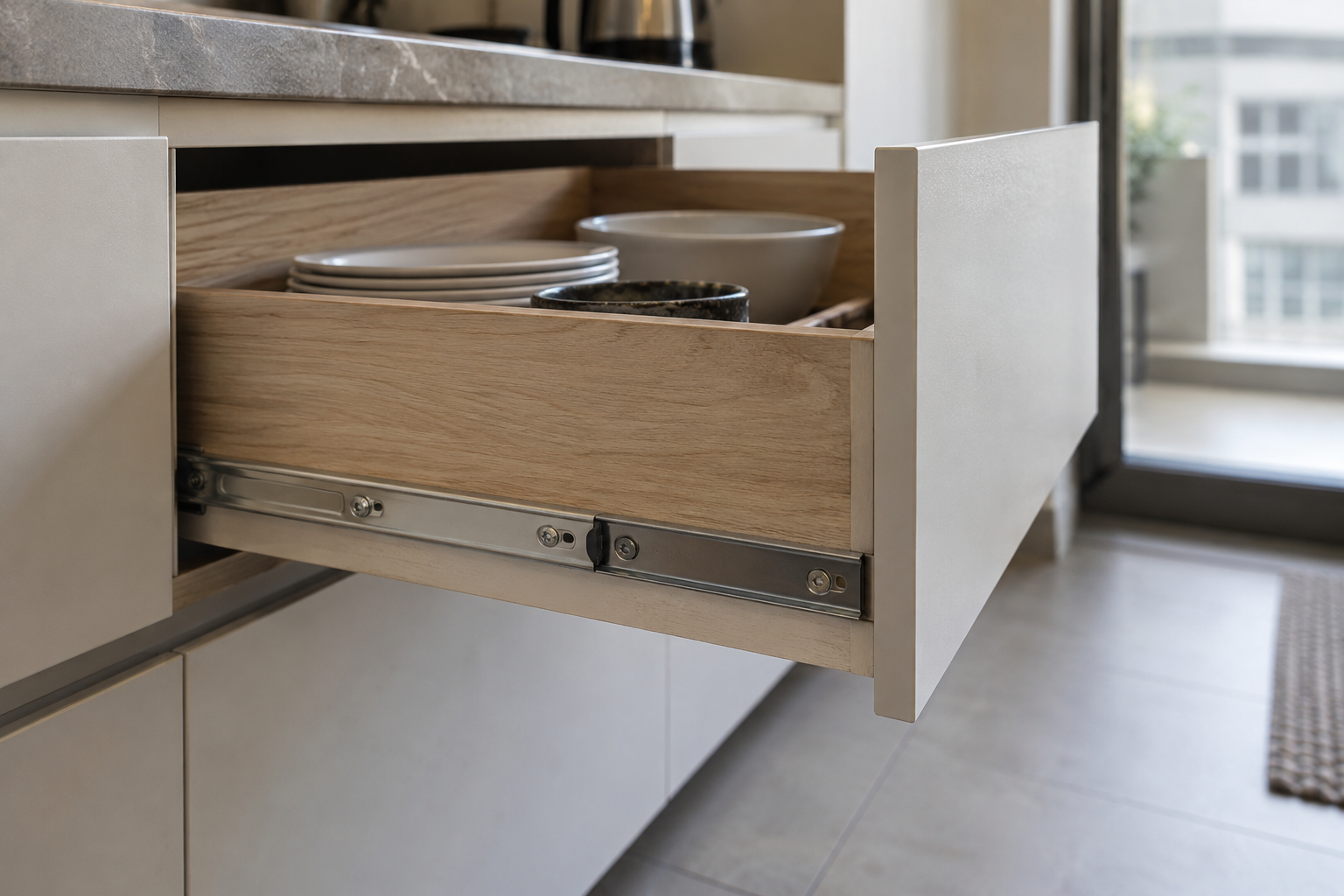
Consider replacement when the existing components cannot support the intended use or the layout must change. A partial rebuild may be suitable where some components remain sound and useful.
| Existing situation | Option to investigate | Assessment needed |
|---|---|---|
| Appearance is dated, operation is satisfactory | Surface refresh or replacement fronts | Substrate and material compatibility |
| Hardware is worn but cabinet bodies are suitable | Hardware repair or replacement | Fixing condition and product fit |
| Some units are damaged | Targeted component replacement | Extent and cause of damage |
| Storage arrangement no longer works | New internals or revised cabinetry | Usable space and cabinet construction |
| Appliances or sink locations must change | Wider kitchen renovation | Layout, services and permissions |
This table identifies a discussion route, not a diagnosis. A competent survey should establish whether damage is local or part of a wider problem. Ask whether retained components will be warranted or serviced differently from new ones, and obtain the actual terms rather than expecting a universal guarantee.
For new cabinetry, the joinery ordering guide explains the information needed before manufacture. A replacement door is only straightforward when its dimensions, fixing arrangement and relationship to retained components are understood.
Why should worktops be assessed separately from cabinet fronts?
Worktops experience different use and exposure from vertical cabinet fronts. A product suitable for one application should not be assumed suitable for the other.
Identify the actual worktop material and condition. Record cracks, damaged junctions, loose sections or areas affected by water. Ask the professional team to assess the cause and the proposed remedy before approving a cosmetic treatment.
Discuss the sink, hob, joints and exposed edges individually. Their relationship to a proposed finish may require specific details or exclusions. Obtain the manufacturer's guidance for heat, water, cleaning and use, and ask how it applies to the selected installation.
If the worktop is replaced, review the effects on adjacent cabinetry, splashback and service connections. A worktop quotation that excludes those interfaces is not directly comparable with one that includes them. Have the responsible trades confirm what will be disconnected, retained, refitted or renewed.
Avoid describing all worktop wrapping as either universally suitable or universally unsuitable. The decision belongs to the particular material, product, condition and expected use. The homeowner's role is to request that assessment and a clear specification, not to infer performance from a decorative sample.
How should the quotations be compared?
Compare options against a shared component schedule and desired result. Separate the scope, assumptions and exclusions before comparing totals.
Prepare a list of units and surfaces, with photographs or marked elevations. Ask each contractor to identify what is included, excluded or provisional. Include preparation, repairs, hardware, protection, removal, refitting and disposal where relevant. Do not invent a market price or a saving percentage for an undefined kitchen.
For wrapping, ask for the exact film reference, preparation method, extent of coverage, detail treatment and care information. For replacement, ask for the cabinet construction, finishes, hardware and installation scope. For a mixed option, make the boundary between retained and new work especially clear.
Ask how unexpected defects will be handled if discovered after a component is removed. A quotation should explain the review and approval process without pretending that hidden conditions are already known. Keep any accepted variation with the component it affects.
The kitchen renovation cost page provides a broader way to think about scope. Your comparison still needs a project-specific quotation based on the inspected kitchen and agreed materials.
What should a representative sample demonstrate?
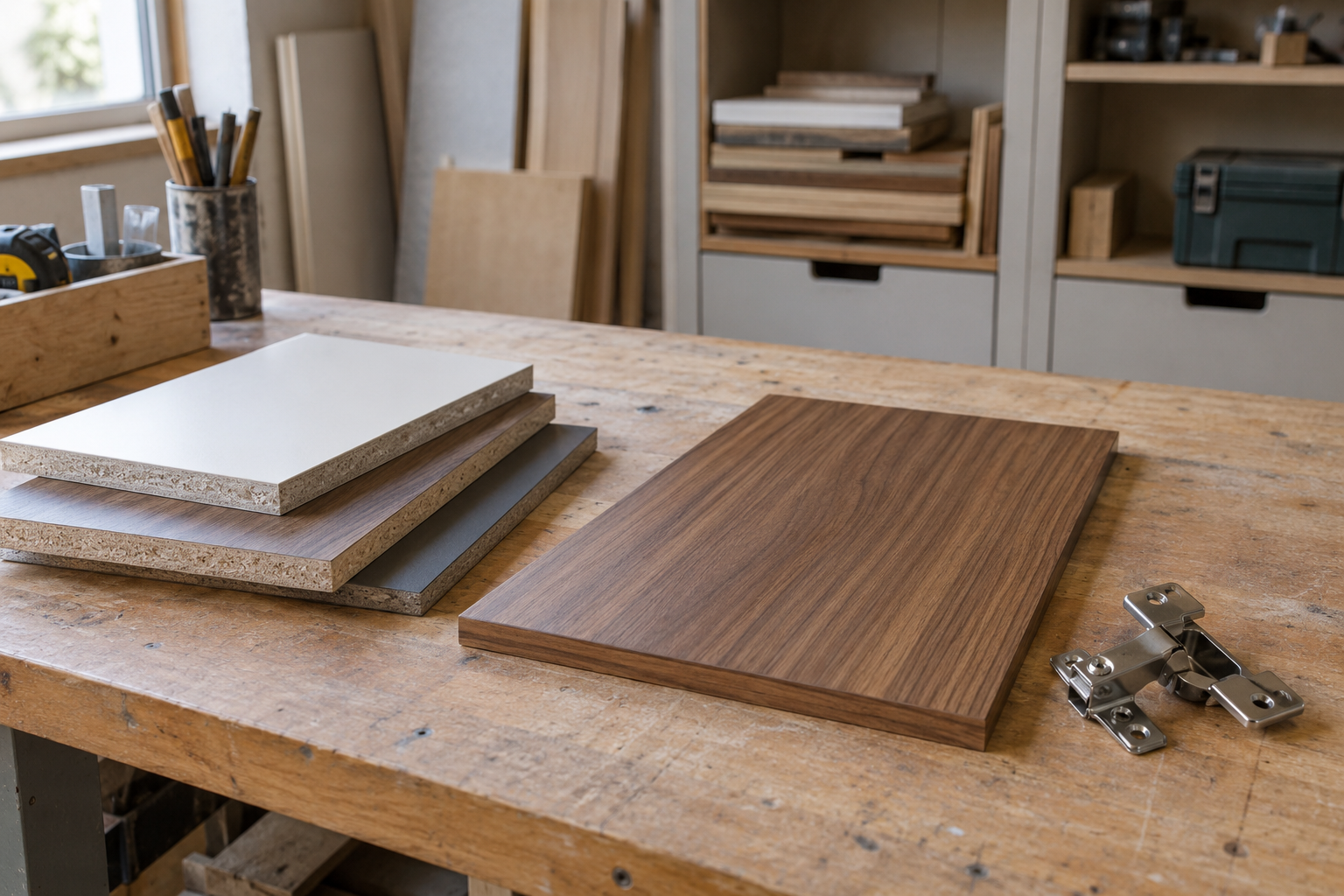
A useful sample demonstrates the intended colour, texture and detail on a relevant surface. It should show the parts that a flat swatch cannot explain.
Choose a detail with an edge, corner or profile similar to the actual doors. Ask where any seams will sit and how adjacent pieces will meet. Review the sample under the kitchen's lighting and beside retained worktop and floor finishes.
Operate the sampled door or drawer if appropriate. Look at the handle area and the visible edge when the door is open. Ask whether internal faces, end panels and exposed cabinet sides will receive the same treatment. Record differences deliberately rather than discovering them after installation.
Keep the approved product reference and sample record together. If stock availability requires a substitution, review the new product's appearance and intended use before accepting it. Similar colour is not evidence of identical performance or care requirements.
For a replacement proposal, request the corresponding construction and finish sample. Compare what you will actually receive, not a photograph of an unrelated completed kitchen. The kitchen materials guide is useful for organising those selections across the room.
How should the work be planned around an occupied home?
Agree access, protection and the period when the kitchen cannot be used before work starts. Have the contractor explain the sequence for the specific scope rather than promising a standard duration.
Ask which components are removed and whether they leave the property. Identify areas needed for preparation or storage and how retained appliances and finishes will be protected. Confirm arrangements with building management where relevant.
If services are disconnected or altered, the appropriate trade needs to plan and document the work. Do not treat a decorative refresh as permission for informal electrical or plumbing changes. Ask the project team to confirm whether the selected scope requires any approvals.
Discuss cleaning and product-specific curing or use conditions with the installer. Follow the actual manufacturer's guidance rather than a generic return-to-use time. If the kitchen is part of a wider renovation project, coordinate it with the other trades so that finished surfaces are not damaged by later work.
What should be checked before accepting the result?
Check the installed components against the approved schedule, then operate the kitchen normally within the product's stated use conditions. Record unresolved items precisely.
- Confirm the installed material and finish references.
- Review the agreed edges, corners and visible junctions.
- Open doors and drawers and check the retained hardware operation.
- Compare included surfaces with the marked scope.
- Obtain care information and the actual warranty terms.
- Record outstanding repairs and who will complete them.
Keep a finish concern separate from a component that was already excluded or a new preference about colour. Clear records help the installer understand whether the issue concerns workmanship, scope or a changed decision.
Frequently asked questions
Is kitchen wrapping always cheaper than replacement?
Compare project-specific quotations for the same intended result. Preparation, repairs, coverage and retained-component condition can materially change the scope, so a universal saving percentage is not reliable.
Can damaged cabinet bodies simply be wrapped?
Do not assume that they can. Have the installer assess the damage and its cause, then explain whether repair or replacement is appropriate before applying a finish.
Can I wrap only the doors?
That may be an option if the installer confirms suitability. Check how the doors will relate to retained side panels, internal faces and exposed cabinet edges.
Will wrapping improve storage?
A surface treatment does not change the cabinet layout by itself. Storage improvements need their own assessment of internals, hardware or revised cabinetry.
Can worktop film be treated like a cabinet-door finish?
No blanket assumption is safe. Ask for the exact product's intended use and an assessment of the worktop, details and expected exposure.
How should you make the decision?
Choose the least disruptive option that genuinely addresses the kitchen's assessed problems and intended use. To discuss a refresh, partial rebuild or wider renovation with 800 Master Renovations, send photographs and your scope. Keep the decision tied to inspected components and written inclusions rather than an attractive before-and-after promise.