Balcony Design Ideas for Dubai Apartments
The most useful balcony design ideas for Dubai apartments start with the space you can actually use: the door opening, the route outside, the existing floor and the hours when you want to sit there. A balcony that looks attractive in a photograph can still be awkward if the chair blocks the door or every cushion needs a storage place you do not have.
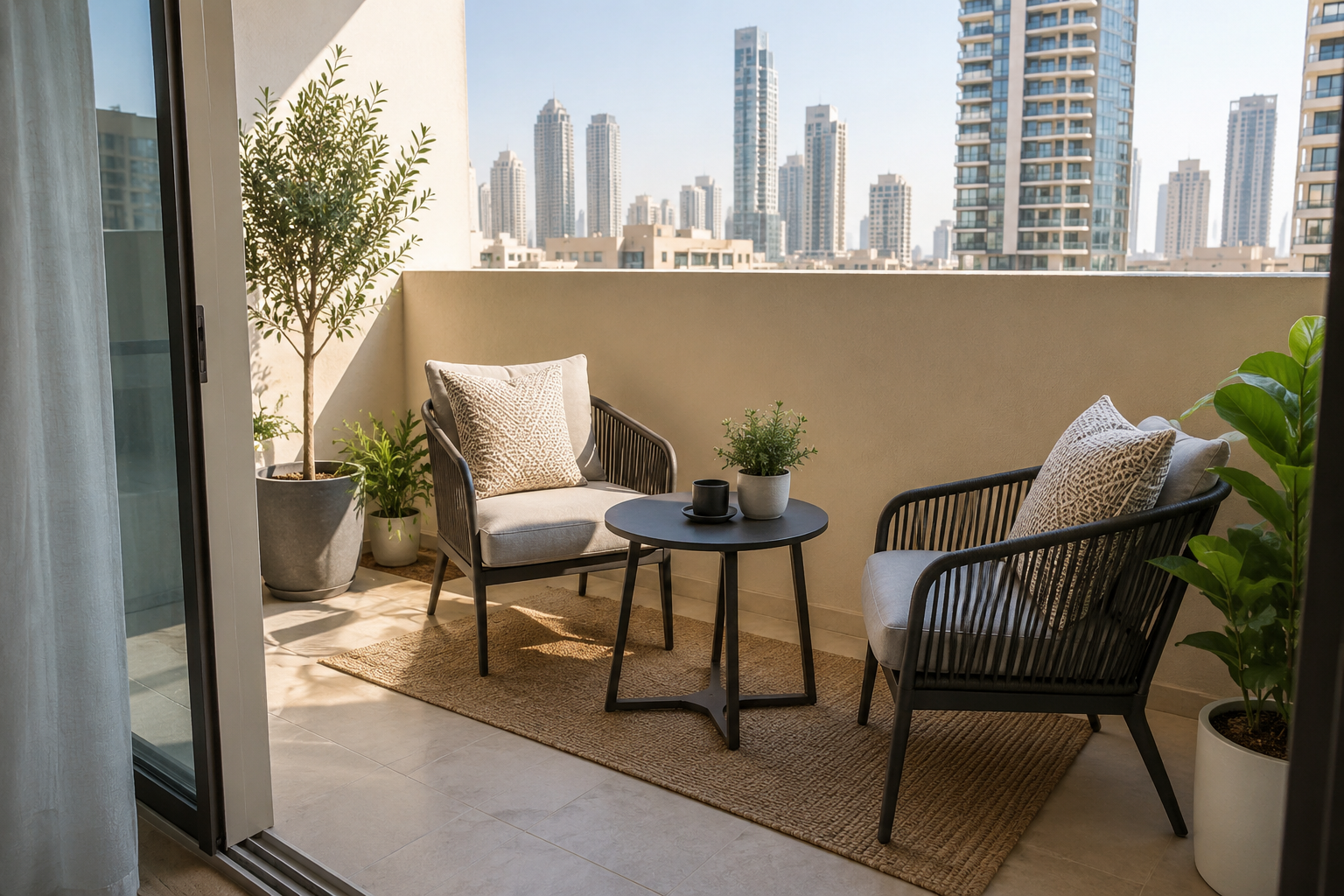
Begin with removable furnishings and a clear activity. Treat changes to the building, enclosure, railings and fixed installations as a separate project requiring proper review.
TL;DR
- Plan around a main activity, such as a quiet drink outside, reading or a compact meal.
- Check your building's rules before buying screens, shade structures or fixed finishes.
- Keep access, drainage and the existing guardrail arrangement unobstructed.
- Choose outdoor products by their actual care instructions and plan where soft furnishings will be stored.
- Try a modest furniture layout before committing to permanent alterations.
Which balcony layout matches the way you want to use it?
Choose an activity first, then test whether the furniture can serve it without making access difficult. A small balcony does not need to accommodate dining, lounging, gardening and storage at the same time.
The options below are planning examples, not approvals for a particular building.
| Intended use | Arrangement to consider | Check before buying |
|---|---|---|
| A drink outside | Low outdoor chairs with a compact table | Door movement and space to sit down comfortably |
| Reading or a quiet break | A comfortable chair and a small surface | Usable shade, glare and where cushions will go |
| Occasional meals | A table with movable chairs | The arrangement with chairs pulled out, not tucked away |
| A little greenery | Modest floor-standing pots where permitted | Watering, cleaning access and placement away from the edge |
| A narrow outdoor space | A deliberately sparse arrangement | Whether standing space is more useful than forced seating |
If the balcony is being considered within a wider apartment renovation in Dubai, keep its decisions linked to the adjoining room. Furniture inside, door movement and the view from the living area all affect how the outdoor space works.
What should you check before decorating a balcony?
Check the existing space and obtain the relevant building guidance before planning fixed additions. A removable product is not automatically acceptable merely because it can be taken away later.
Photograph the balcony from the doorway, note visible drains and record the dimensions of the furniture you are considering. Ask management where to find the current rules for your building. If you rent, include the owner in discussions about proposed changes.
Community rules can materially change your options. Emaar Community Management's Emaar Beachfront guidance prohibits balcony coverings including screens, awnings, pergolas, curtains and shades. It also restricts storage and barbecuing. That is a named community's guidance, not a claim that every Dubai building has identical rules.
For another example, ECM's Dubai Marina modification guidance directs owners to the modification process and says external changes affecting apartment aesthetics are not permitted. Read the applicable guidance rather than assuming a neighbouring tower's arrangement gives you permission.
Use the renovation approvals guide to prepare questions if your idea extends beyond loose furniture. The guide does not replace your building's decision.
How can you make a small balcony feel comfortable?
Use fewer pieces and check them in their occupied positions. A table-and-chair set that fits when folded or pushed against a wall may not work during use.
Sketch the arrangement with the door open and the chair pulled back. Check the route from the apartment to the seat and the space needed to move around it. You do not need a universal furniture clearance figure to discover that a chair catches the sliding-door handle or makes the balcony inconvenient to clean.
Avoid buying a complete matching set before confirming that every piece has a purpose. You may prefer a comfortable chair with a small table to a larger arrangement that leaves little usable floor.
Test proportions using the dimensions in the retailer's product information. Compare seat depth as well as the overall footprint. If you can try the chair in person, check whether its sitting position suits reading or dining; those are different uses.
Keep the design connected to the room inside. A restrained colour or repeated material can create a relationship without changing the external walls. For help with that larger brief, review the interior design service.
How should sunlight and wind influence the design?
Observe the balcony at the times you intend to use it. Choose the seating position and products around those conditions instead of assuming that a photograph taken at a pleasant moment represents the whole day.
Keep a simple observation note: where direct sun reaches the chair, whether glare affects reading, and which loose objects are difficult to manage. This is a personal planning record, not a weather survey or a wind-resistance assessment.
Do not solve exposure by attaching a screen to the railing or installing an awning without review. Your community may prohibit it. If shade is not available or permitted, change the intended use or time of use rather than treating enclosure as a decorative shortcut.
Ask the supplier whether a proposed outdoor item is appropriate for the conditions and what precautions its instructions require. Do not assume that extra weight makes an accessory safe in wind, or that "outdoor" is a certified performance statement for every exposed high-rise setting. If securing an item would alter the building, raise that with management and a qualified installer before purchase.
Which outdoor furniture materials are practical?
Choose a product you are willing to maintain, then verify its specific care information. The material name alone does not tell you how every coating, joint or cushion will behave.
IKEA's outdoor furniture care guide describes cleaning and seasonal storage for its products, and notes that wooden outdoor furniture needs additional care. It recommends storing cushions dry when not in use. These are manufacturer recommendations, not a guarantee of performance on your balcony.
Look for removable cushion covers if that suits your routine, but check the wash instructions. Ask where the cushions will live when you are away. An outdoor storage box is only an option if management permits it and the product fits without obstructing access.
Avoid choosing a finish entirely from a close-up photograph. Touch a sample where possible and consider how visible dust, marks or cleaning residue will be. Select the surface you want to live with, not just the one that photographs most dramatically.
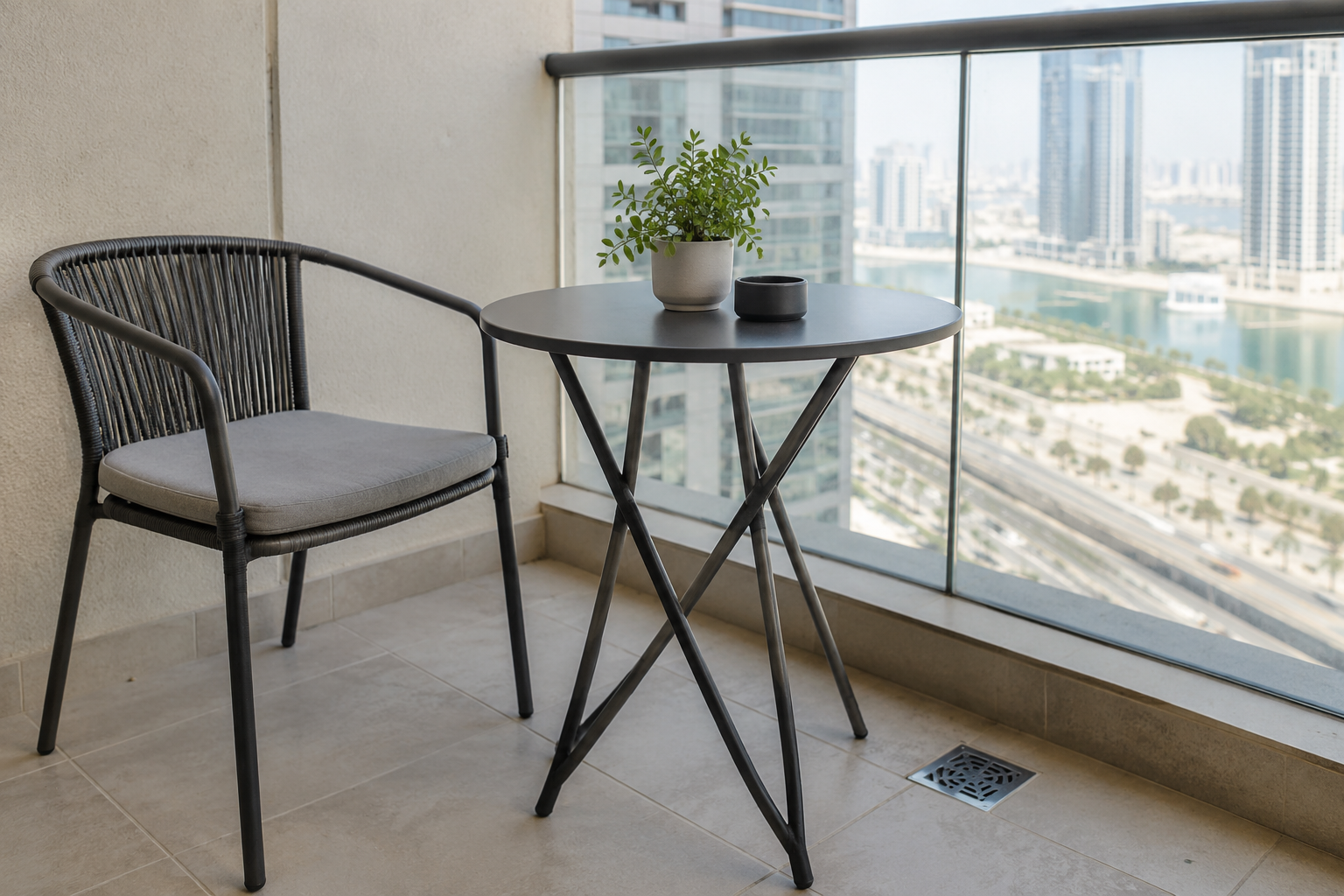
Should you add decking, rugs or new balcony flooring?
Start by assessing the existing floor, access and drainage. Do not conceal damage or assume that a removable covering has no effect on the space beneath it.
Ask management and the relevant supplier about any proposed floor covering. Check how it would be lifted for cleaning, whether it affects the door threshold and how drains remain accessible. The choice should be reviewed in the actual setting, not approved from a product photograph.
A rug may make a seating corner look softer, but consider the routine it creates. Where will you dry it? How will you clean underneath it? Would bare tiles with comfortable seating be easier to use? There is no requirement to add another material just to make the balcony feel finished.
If the existing floor has cracks, loose finishes, persistent pooling or suspected leakage, stop the decorative work and report the condition. Have it assessed before covering it. This article does not provide instructions for replacing waterproofing, changing falls or repairing a balcony slab.
How can plants fit without taking over the balcony?
Use plants as a considered part of the arrangement, subject to your building's rules. Begin with a manageable selection and ask a suitable supplier about the actual light and exposure available.
Keep pots on permitted, stable surfaces and ask the project team to review placement where needed. Do not hang containers outside the guardrail or turn the railing into a DIY fixing system. Large planters and concentrated loads require proper assessment; there is no safe universal allowance to infer from an online style guide.
Plan the care routine before buying. Who waters the plants while you are away? How will the floor be cleaned, and where will excess water go? Choose an arrangement that does not depend on dragging a collection of pots around every time you need access.
Avoid promising that a species is maintenance-free or guaranteed to thrive on every Dubai balcony. A shaded recess and an exposed setting are different growing conditions. Show the supplier your observations and ask for advice specific to the proposed location.
What should stay out of a balcony makeover?
Keep the guardrail, building envelope and fixed services outside a simple decoration brief. If they need attention, arrange a separate review with management and the appropriate professionals.
DDA's published guardrail circular, dated September 2016, discusses fall protection and climbable features. It demonstrates why the edge of a balcony is a safety element, not a styling accessory. It is not a complete current code check for your building, and this article does not provide a DIY railing specification.
Have the arrangement reviewed if furniture or planters could create access to the edge, particularly where children use the home. Supervision and professional advice cannot be replaced by an attractive enclosure or an unverified screen.
Do not add electrical wiring, change drains, fix objects through waterproofing or attempt to alter glass yourself. A damaged guardrail or glass panel needs prompt reporting, not concealment with decoration. Stop using the affected area until the responsible team has assessed the concern.
How can you prepare a balcony design brief?
Prepare a short brief with the intended use, existing conditions and proposed products. Keep anything awaiting permission separate from the items you can evaluate now.
- Describe when and how you hope to use the balcony.
- Gather photographs, available dimensions and the applicable building guidance.
- Choose a modest furniture arrangement and check it with chairs in use.
- Record product care, storage and cleaning needs.
- List any fixed additions for separate review rather than assuming approval.
- Confirm unresolved conditions before placing orders.
A budget comparison should separate products, delivery, assembly and any professionally assessed work. Do not use a generic makeover price as proof that your proposal includes permissions or repairs. If you are comparing a wider project, the home renovation service provides the surrounding scope to discuss.
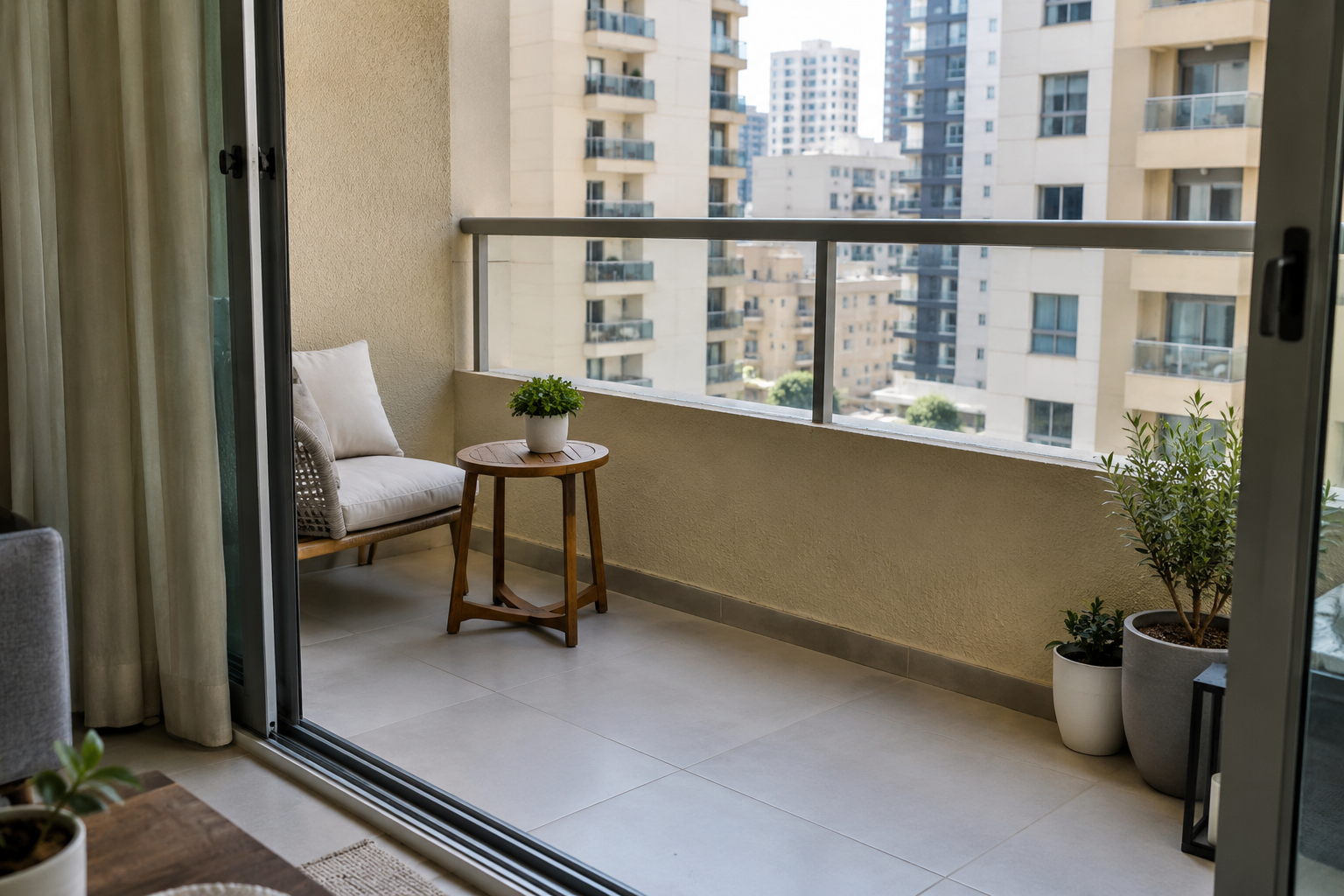
What questions do Dubai residents ask about balcony design?
What is a useful small balcony design idea?
A sparse arrangement serving a clear activity is a useful starting point. Try comfortable seating and a compact surface before adding several other functions. Check the occupied layout and your building's rules before buying.
Can I install a privacy screen on my balcony?
Do not assume permission. Some community guidance expressly prohibits screens and coverings. Ask management for the current rules that apply to your building and proposed item.
Can removable decking be added without approval?
Removability does not establish permission or suitability. Ask about the proposed product, drainage access and threshold conditions. Have existing defects assessed before covering the floor.
What furniture should I buy for a Dubai balcony?
Choose an outdoor product that suits the layout and the care routine you can maintain. Read the manufacturer's instructions and ask about the actual exposure. Do not infer suitability for a high-rise setting from the word "outdoor" alone.
Can I turn the balcony into an enclosed room?
That is outside a decoration brief and cannot be assumed permissible. It involves the building exterior and needs project-specific assessment and applicable permissions. Do not purchase enclosure components before the proposal is reviewed.
Do plants and cushions need a storage plan?
They need a practical care plan. Consider cleaning, watering, absence from home and where dry cushions can be kept. Check community restrictions before adding an outdoor storage unit.
What is the best starting point for your balcony?
Choose a useful activity, keep the layout modest and check the rules before fixed changes. The balcony should remain accessible and maintainable, with safety concerns assessed before decoration begins.
For a balcony considered as part of an apartment redesign, share your brief with 800 Master Renovations. Include the building guidance and existing photographs so that decorative choices can be separated from work needing further review.
Publisher: 800 Master Renovations. Sources checked: October 2026. This is general design planning, not structural, electrical, waterproofing or legal advice. Project-specific conditions and permissions require the responsible management and qualified professionals.